







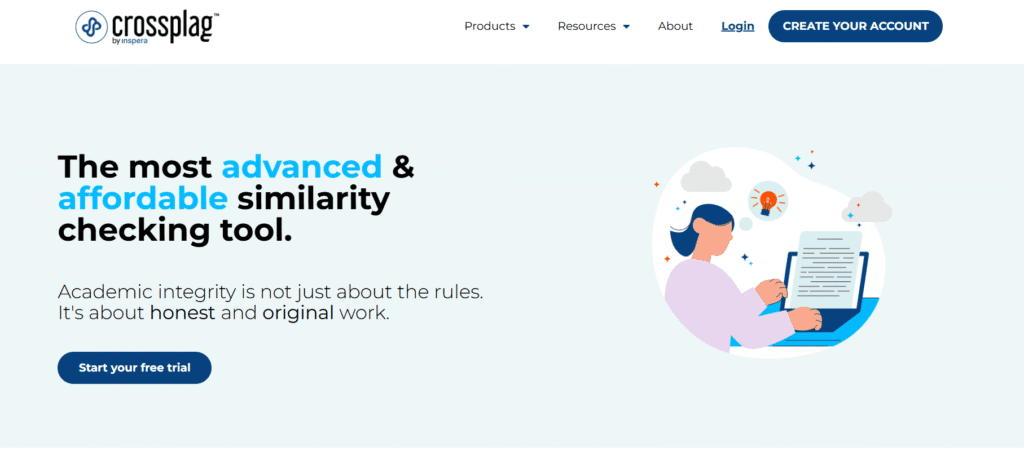
Crossplag is a tool for spotting AI generated text and checking originality. It mixes AI detection and plagiarism features in one platform.
It supports multiple languages and translation plagiarism, not just one. It’s used by educators, writers, businesses to maintain content integrity.
You paste or upload your text into Crossplag’s AI Content Detector. It returns a “confidence percentage” that estimates how likely the text was written by AI.
It also runs similarity checks across texts and translation zones (cross-lingual plagiarism). It shows flagged portions or areas of concern (depending on version).
Recently, they upgraded the detector: more words can be scanned, fewer false flags.
During its beta phase, Crossplag offers its AI Content Detector free for individual users to test and use.
For heavy or institutional use, there are paid plans. Prices are not always fully public some third party sources break them down.
So: free access in early use, pay when scaling up.
Easy to use: paste text, see results
Free option for casual users
Supports translation plagiarism (multi language)
Upgrades improving accuracy and coverage
Accuracy can fluctuate, especially with nuanced texts
It may flag human text falsely (false positives)
Pricing and tiers are not fully transparent publicly
Detection on advanced AI / paraphrased text is more challenging
Break long text into segments sometimes smaller portions get more accurate detection.
After you get flagged results, rephrase or humanize those parts and test again.
Leverage its cross lingual plagiarism check when checking translations or multilingual content.
Use the upgraded version if available (newer detector) to get fewer false positives.
Don’t rely solely on the confidence score: review manually for style, voice, meaning.