











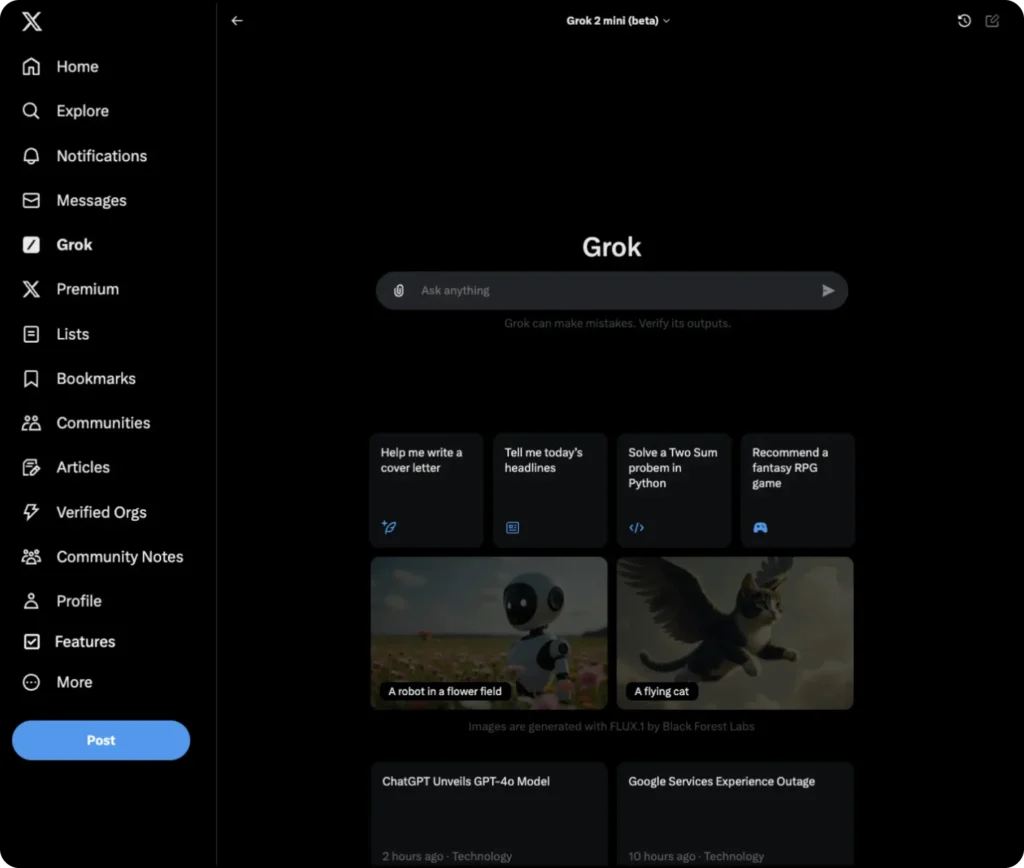
Grok-2 Beta is the upgraded version of xAI’s Grok AI assistant. It’s built to handle both text and images. The model also taps into real-time data via its X (formerly Twitter) integration.
There is also a smaller sibling called Grok-2 mini for lighter tasks. Beta access is given to X Premium / Premium+ users first.
Grok-2 understands images you can upload pics and ask questions about them. It reasons better it can chain logic across multiple steps.
It aims to be fast reports say it’s about three times quicker than older versions. It picks up real-time info it’s tied to X to fetch fresh data.
It supports multiple languages and better instruction following.
Grok-2 is currently in beta, so full pricing is not public. Free users can use it but with stricter limits. Premium / Premium+ users get higher usage caps and priority access.
Also, xAI announced that Grok-2 will be free for all on X, with limitations.
In enterprise / API scenarios, pricing is likely by token usage (input / output). (No confirmed rates yet)
Have a look at AI writing assistant with alternatives
I couldn’t find exact monthly visitors for the Grok-2 page itself. As for Grok / xAI more broadly: Grok app has 50M+ downloads on Android.
On social media etc, I did not see a reliable “total followers across platforms” number.
When I looked at “AI Girlfriend MiniApps” tools, and other frontiers in AI assistants, top competitors often emphasize words like virtual companion, realistic chat, custom AI personality, memory, unfiltered chat, image generation, voice / roleplay features.
Also for AI assistant tools bloggers use “next-gen reasoning”, “multimodal AI”, “real time updates”, “vision + language”, “fast inference”, “beta access”, “usage limits”.
To rank well, I’d weave in natural phrases like “multimodal reasoning”, “image understanding”, “real-time intelligence” and “high inference speed” (without overdoing).
Here’s a sample:
“Grok-2 can look at a photo and tell you what’s inside it. It can also link that to what’s happening right now in the news. That mix of vision + real-time data feels fresh. It helps when you ask it about trends, events or images. You get answers that feel alive.”