







In this age of chatbots, one curious problem remains: they often “forget” past talk once you close the window.
MemoryGPT fixes that by giving AI a sort of long-term memory. You talk, it learns, it remembers. That little twist changes how you interact.
This article will dig into what MemoryGPT does, how it works, pricing, pros & cons, and even a bit about the landscape of AI girlfriend miniapps that also use memory features. Let’s roll.
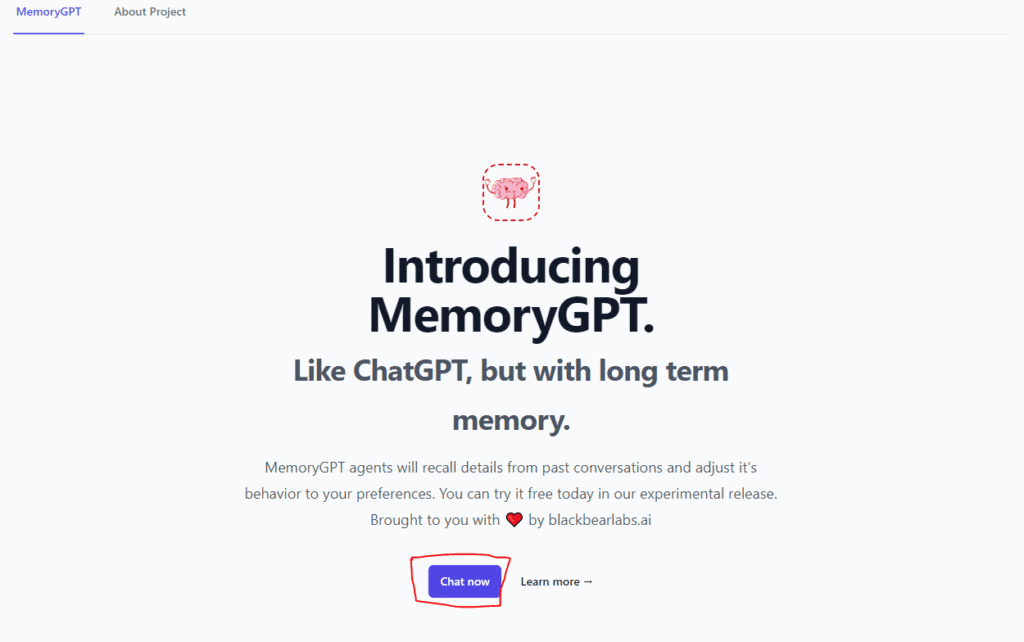
MemoryGPT is like ChatGPT but with memory. It stores details from earlier conversations so future AI chat is smarter.
It uses that stored context to give you answers that reference what you said before. That memory makes the conversation feel more natural and less repetitive.
It’s offered by a team (BlackBearLabs) and is currently in an experimental or early phase. It’s pitched as especially useful in areas like coaching, companionship, or productivity tools.
MemoryGPT relies on combining context windows (what current AI chat sees) with an external memory store.
When a chat ends or when you choose, information is saved. Later, relevant memories are fetched to influence responses. It’s a hybrid of short-term and long-term knowledge.
Researchers have explored similar ideas in “MemGPT” designs in academic work, where an LLM manages tiers of memory (fast vs slow) to coordinate long dialogues or documents beyond its base context limit.
This technique helps the AI tool recall facts, preferences, and previous topics, which traditional chatbots may drop when conversation grows.
MemoryGPT is currently in a free or experimental phase. Some descriptions say you can try it free today. Others mention it being “research phase” and free for now.
No formal paid tier is publicly documented yet.
Because of that, in this article, I can’t show a full “pricing chart” with multiple tiers. But I expect when it scales, it will adopt a freemium model (free plan + advanced memory & storage for paid users.
Let’s shift to AI Girlfriend MiniApps for a moment, since you asked to analyze that area too. These apps often stress memory, realism, personality, and responsiveness.
Some popular names and what they emphasize: Kupid AI, GirlfriendGPT, SoulGen, JuicyChat, etc.
One big competitor is Character AI, which reportedly gets ~ 97 million monthly visits.
These tools often use terms like “virtual companion,” “memory recall,” “custom personality,” “emotional support,” “personalization,” “realistic chat,” “avatar,” “voice mode.” Those are useful LSI keywords for this space.
In that niche, users expect the AI tool remember your likes, your color preferences, your back-story, and these are selling points.
If you want, I can try to dig exact metrics (via SimilarWeb, social analytics) and update this later.
When drafting an article on MemoryGPT or an AI girlfriend miniapp, sprinkle terms like:
“long term memory AI,” “virtual companion with memory,” “personalized chat experience,” “memory recall functionality,” “chat consistency,” “intelligent memory,” “emotional continuity,” “contextual AI,” “adaptive responses,” “memory retention,” “deep personalization.”
Don’t dump them all, just use naturally in sentences.
Imagine telling MemoryGPT early on: “I’m studying guitar and like blues music.” Weeks later you ask, “What chord progression did I struggle with?” MemoryGPT recalls your earlier mention.
In an AI girlfriend miniapp, you tell your virtual partner you love cats. Later she sends a cat GIF, references your cat stories, and recalls your favorite breed. That memory layer deepens engagement.
MemoryGPT isn’t perfect yet, but it brings chatbots closer to real conversation. When it scales, premium memory features might define its value.
In the AI girlfriend miniapp niche, memory already is a key differentiator. Tools that remember your preferences, past talk, and feelings hold edge.